
Growing food without soil in an apartment is not a new idea, but the equipment required to do it reliably has become more compact, affordable, and well-documented over the last decade. Hydroponic systems deliver dissolved nutrients directly to plant roots, which means plants spend less energy searching for food and more energy producing leaves, fruit, or root mass. The result is faster growth cycles and higher yields per square meter than most soil setups in equivalent light conditions.
This overview focuses on two systems that work well in limited indoor spaces: nutrient film technique (NFT) and deep water culture (DWC). Both can be built from components available in Poland without specialist imports.
Understanding the Core Difference: NFT vs DWC
In a nutrient film technique system, a thin continuous stream of nutrient solution flows along the bottom of a sloped channel. Plant roots hang partially in the film and partially in the air above it. This air gap is important — roots need oxygen, and full submersion without aeration causes them to suffocate within days.
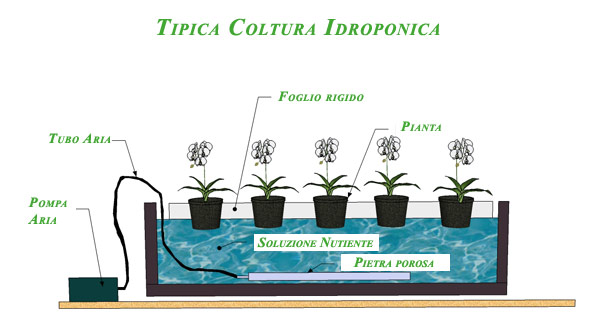
Deep water culture works differently. Plants are suspended in net pots above a reservoir of nutrient solution, and their roots hang down into the liquid. An air pump keeps oxygen levels in the solution high enough for root survival. Because the reservoir holds a significant volume of water, DWC systems are more stable in nutrient concentration and pH — small fluctuations correct themselves more gradually than in NFT channels, where the thin film has almost no buffering capacity.
For a first build, DWC is generally more forgiving. NFT is more efficient at scale but requires closer monitoring of flow rate and channel gradient.
What Equipment Is Actually Required
A functional DWC setup for a 60 × 40 cm footprint (roughly fitting on a desk or shelf) requires:
- A food-grade container or bin, minimum 20 liters for stable pH buffering
- Net pots (50 mm diameter works for most herbs and salad crops)
- An aquarium air pump with air stone and tubing — 2–4 liters per minute output per 20 liters of solution
- A grow light positioned 25–40 cm above the canopy (discussed separately in the grow lights article)
- A pH meter, calibration solution, and pH adjustment liquids
- An EC meter for measuring nutrient concentration
- A two-part or three-part hydroponic nutrient solution — many Polish garden suppliers now stock Canna, General Hydroponics, or equivalent brands
- Expanded clay pebbles (hydroton) or rock wool cubes as the growing medium in net pots
The total component cost for a single DWC unit as described above falls in the range of 200–450 PLN depending on the light source chosen. Ongoing costs are primarily nutrients and electricity.
Nutrient Management and pH
The most common failure point in home hydroponics is pH drift. Plant roots can only absorb nutrients within a fairly narrow pH window — approximately 5.5 to 6.5 for most vegetable crops, with the ideal sitting around 6.0 for mixed plantings. Outside this range, nutrients become chemically locked in forms the plant cannot take up, regardless of how much is present in solution.
In a DWC reservoir, pH typically rises over time as plants consume acidic nutrients and release basic compounds. Checking and adjusting pH every two to three days is standard practice for a functional system. Larger reservoirs drift more slowly; a 20-liter container might need adjustment twice a week, while a 5-liter system can shift significantly within 24 hours.
Electrical conductivity (EC) measures the total dissolved salt content — a proxy for nutrient concentration. Seedlings and young plants tolerate EC values around 0.8–1.2 mS/cm. Mature leafy crops perform well at 1.5–2.0 mS/cm. Fruiting crops like tomatoes or peppers can sustain up to 3.5 mS/cm at peak production. If the EC drops faster than expected, plants are consuming nutrients actively; if it climbs while water level drops, plants are drinking water but leaving salts behind — a sign of possible root stress or excessively high concentration.
Plant Selection for Indoor Hydroponic Systems
Not every crop is practical for apartment hydroponics. The most reliably productive options in a DWC or NFT setup are fast-cycling, compact plants with modest light requirements:
- Lettuce varieties (butterhead, oakleaf, romaine) — harvest in 35–45 days from transplant, tolerant of moderate light levels
- Basil — high-yield in hydroponics, but requires strong light (PPFD above 200 µmol/m²/s) and warm temperatures; production slows significantly below 20°C
- Spinach and arugula — cool-season crops that perform well in the lower light conditions of Polish winter apartments
- Mint and chives — perennial herbs that regrow after harvest, providing continuous yield from a single planting
- Cherry tomatoes — possible in DWC with appropriate support structures, but require significant light (at minimum 300 µmol/m²/s) and attention to calcium and magnesium levels
Fruiting crops like tomatoes, cucumbers, and peppers demand much more light, vertical space, and nutrient precision than leafy crops. For a first system, leafy greens give the fastest feedback and the clearest signal when something is wrong.
Germination and Transplanting
Most hydroponic growers start seeds in rock wool cubes or rapid rooter plugs rather than soil. The cube holds moisture while allowing air exchange at the root tip. Seeds are typically germinated in a covered tray at around 22–24°C, keeping the medium moist but not saturated. Once a root tip emerges from the bottom of the cube — usually after 5–10 days depending on species — the seedling is ready for transplant into the net pot and reservoir.
At transplant, keep the EC low (around 0.6–0.8 mS/cm) to avoid burning the young root system. Raise the EC gradually over 10–14 days as the plant establishes.