
Light is the single most important input in any indoor growing setup. A hydroponic system with perfect nutrients and pH will produce almost nothing if the light intensity or spectrum is inadequate. Understanding what artificial lighting actually provides — and what each technology trades off — is necessary before purchasing any fixture.
The three categories in widespread use for food crops are LED panels, high-pressure sodium (HPS) lamps, and fluorescent or T5 tubes. Each has a different cost profile, heat output, spectrum, and energy efficiency. The right choice depends on what crops are being grown, the available ceiling height, and how much heat the space can tolerate.
How Plants Use Light: PPFD and Spectrum Basics
The relevant measurement for plant lighting is photosynthetic photon flux density (PPFD), expressed in micromoles of photons per square meter per second (µmol/m²/s). This measures the number of photons in the wavelength range plants use for photosynthesis — roughly 400 to 700 nm — that land on a given area each second.
General PPFD reference points for indoor food crops:
- Seedlings and clones: 100–150 µmol/m²/s
- Leafy greens and herbs: 150–300 µmol/m²/s
- Fruiting crops (tomatoes, peppers, cucumbers): 400–800 µmol/m²/s
- High-demand fruiting at maximum productivity: 800–1200 µmol/m²/s
Spectrum matters alongside intensity. Blue light (400–500 nm) drives compact vegetative growth. Red light (600–700 nm) is the primary driver of photosynthesis and flowering. Far-red (700–750 nm) affects flowering timing and stem elongation. A full-spectrum LED covering 400–750 nm generally performs well across the entire plant lifecycle without needing separate fixtures for vegetative and flowering stages.
Watt ratings on packaging do not reliably indicate actual light output. A 100W LED panel and a 100W HPS bulb deliver very different PPFD values at the same mounting height. Always check manufacturer PPFD data, not just wattage.
LED Grow Lights
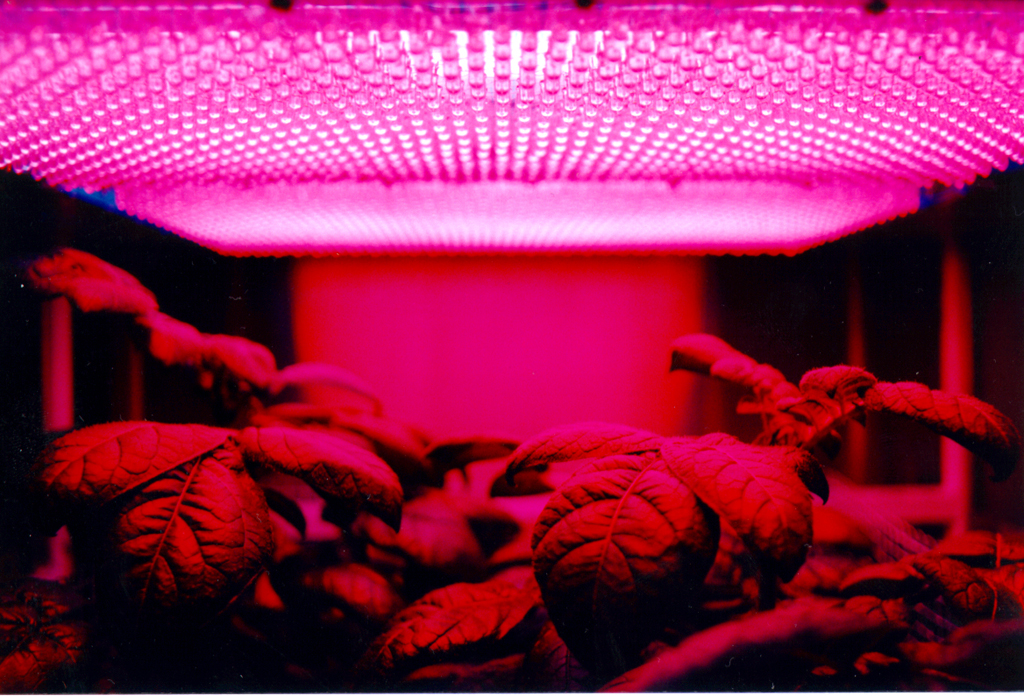
Modern quantum board LED panels have become the dominant technology for home-scale indoor growing over the past several years. The primary reasons are energy efficiency and low heat output. A quality LED panel converts a higher percentage of input electricity into usable photons compared to HPS or fluorescent alternatives, which means less heat generated per unit of light delivered.
For a 60 × 60 cm growing area with leafy crops, a well-specified 100–150W LED panel from a reputable manufacturer (Samsung LM301H or similar diodes) will typically deliver 300–500 µmol/m²/s at a mounting height of 30–40 cm — sufficient for high-yield lettuce and herb production. The same area planted with cherry tomatoes would need 600+ µmol/m²/s at canopy level, requiring either a higher-wattage fixture or a closer mounting distance.
Key considerations when comparing LED panels:
- Efficacy rating in µmol/J — look for 2.5 µmol/J or above for current-generation panels
- Diode brand and binning — Samsung, Epistar, and Lumileds are commonly documented brands with published datasheet values
- Driver quality — Meanwell drivers have a documented reputation for reliability and precise current control
- Thermal management — a heatsink that runs uncomfortably hot to the touch is dissipating heat that should have become light
High-Pressure Sodium (HPS) Lamps
HPS lighting was the standard for indoor cultivation for decades before LED technology matured. HPS lamps emit a broad spectrum with strong output in the orange and red wavelengths (550–650 nm range), which makes them effective for flowering and fruiting crops. Their main weakness is efficiency — a significant portion of energy is lost as heat, and the operating temperature of the lamp itself creates heat management challenges in enclosed spaces.
For Polish apartments, HPS is generally impractical for several reasons. A 400W HPS system — the minimum useful size for fruiting crops — generates approximately 400–500W of heat per hour of operation, raising room temperature measurably in winter and creating cooling problems in summer. The ballast adds additional cost and bulk. Running costs are also higher per unit of light delivered compared to current LED panels.
HPS remains relevant for larger grow rooms with dedicated climate control and where the heat output is useful during cold months, but it has no practical advantage over LED in a typical apartment context.
Fluorescent and T5 Tubes
T5 high-output fluorescent tubes occupy a specific niche: seedlings, clones, and low-light crops at close range. A bank of four 54W T5 tubes positioned 5–10 cm above a seedling tray delivers reasonable PPFD values for germination and early vegetative growth without the intensity required by mature plants.
For established leafy crops in a production setup, T5 fluorescents are outcompeted by current LED panels in both efficiency and light output per square meter of coverage. Their role in a well-equipped home grow is most logically as a dedicated germination station rather than a primary production light.
Photoperiod and Light Schedules
Most leafy crops and herbs are day-neutral — they do not require specific light period lengths to produce harvestable growth. A schedule of 16 hours on, 8 hours off works well for most of these crops. Using a mechanical or digital timer ensures consistency, which matters more than the exact schedule chosen.
Fruiting crops that depend on flowering — tomatoes, peppers — are also day-neutral for most commercial varieties and will flower under any photoperiod as long as intensity and temperature are adequate. Strawberries are more variable, with some varieties requiring short-day conditions to initiate fruiting. Always verify the specific variety's requirements before constructing a light schedule.
Running lights during nighttime hours takes advantage of off-peak electricity rates in some Polish tariff structures (Taryfa G12) — a practical consideration for systems with continuous operation.